Goals & programming
Listen to stakeholders. Define purpose, activities, capacity, space relationships, and essential outcomes.

Savoie Studios / Public Procurement Design Criteria Development
A coordinated service for public owners: define the project, support procurement, and evaluate the developing design against the requirements that matter.
Our public procurement design criteria development service brings owner advisory, technical procurement support, and design review together in one engagement. We help public owners define what the project must achieve, give competing teams a clear basis for their proposals, and keep the owner’s intent visible as the work develops.
You may know this role as Design Criteria Developer or Owner Advisor. We define the actual responsibilities around the project’s delivery method, procurement requirements, and the support your team needs.
A collaborator’s perspective / Design leadership
“He listens carefully, draws on each discipline’s expertise, and guides the team toward an integrated solution that balances design ambition, operational needs, and the available budget.”
Reflecting on collaboration with Steven across projects prior to Savoie Studios.
An owner’s guide to Indiana design-build
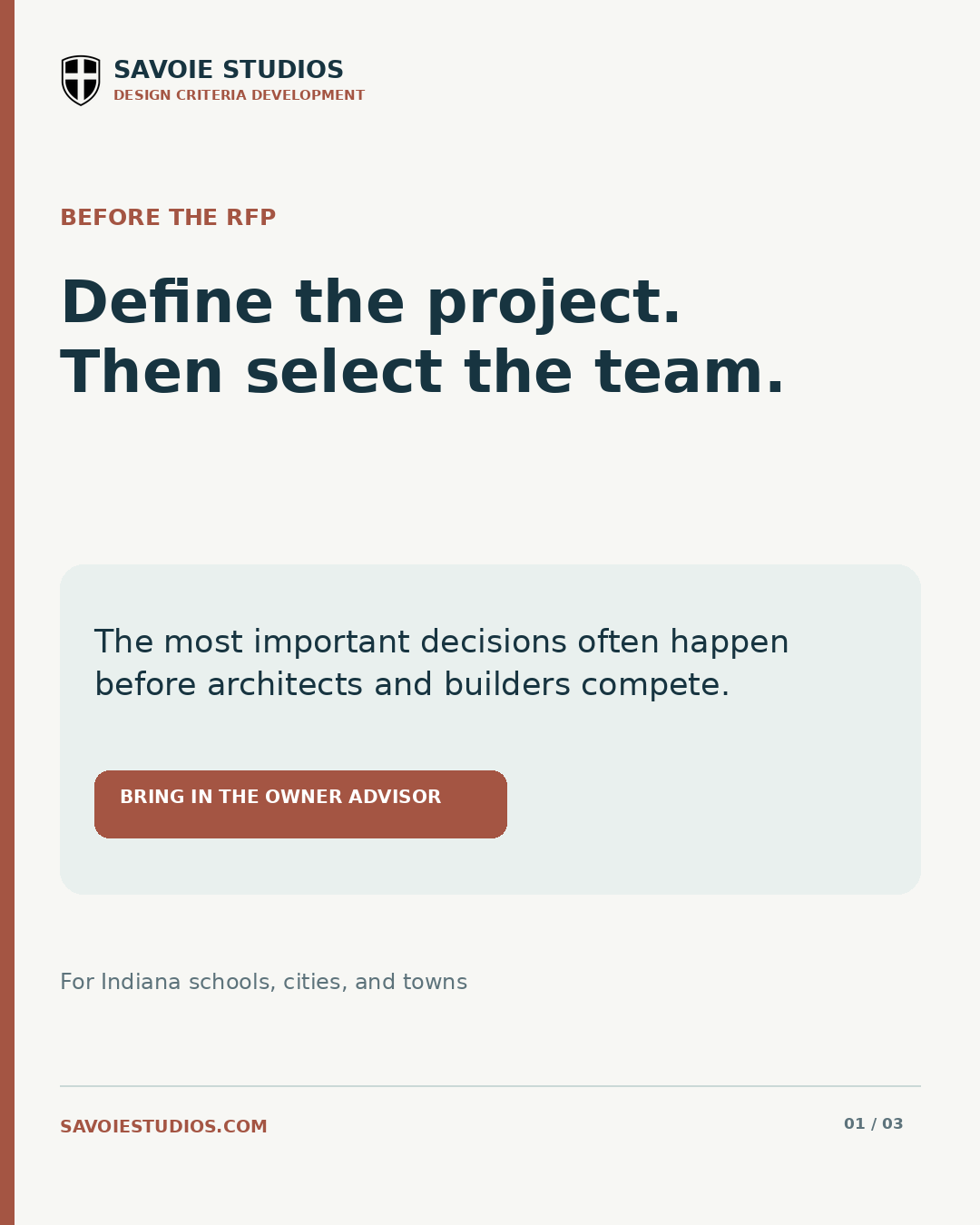
For Indiana school boards, cities, and towns, the first decision is not which team to hire. It is what the facility needs to accomplish, what the owner can afford, and how proposals will be judged. An early conversation with a design criteria developer gives those decisions room to develop.

Indiana’s public design-build law defines a design criteria developer as a registered architect or professional engineer responsible for preparing the owner’s design criteria package. Each design-build request for proposals must include that package. The public agency decides its scope and level of detail. Indiana Code, Article 5-30
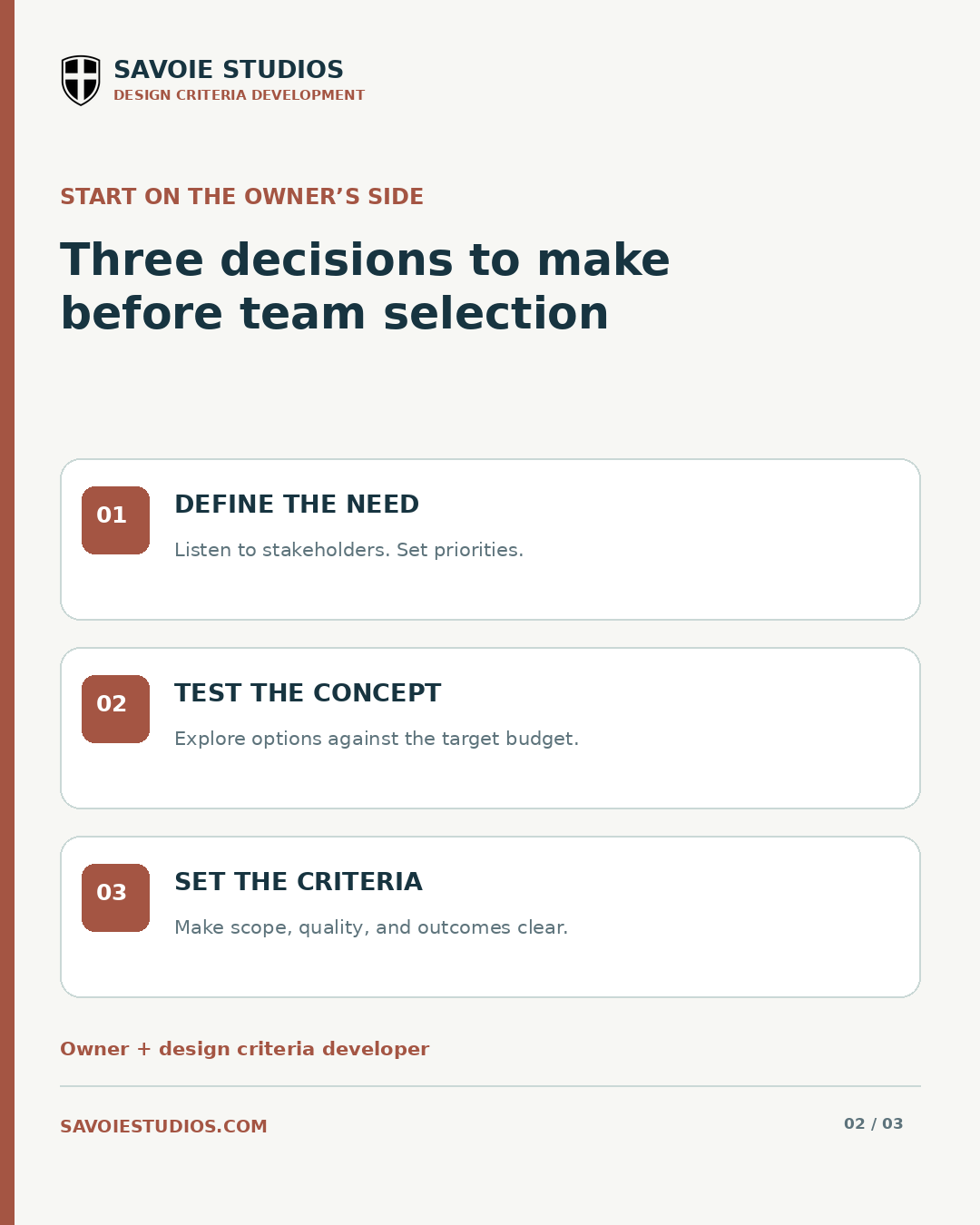
Identify the goals, stakeholders, site constraints, schedule, and target budget. Test early concepts against what the owner can realistically fund before the scope becomes a procurement commitment.
Compare design-build with other viable methods using the project’s complexity, schedule, desired control, and available resources. If design-build is the right fit, translate the owner’s priorities into clear requirements.
Give competing teams a common basis for proposals. Depending on the project, criteria may address space needs, site development, quality, performance, budget, and schedule. The agency determines the appropriate detail.
Follow the applicable qualifications and proposal process under IC 5-30. Review responses against the published criteria and document material differences with the owner’s procurement and technical teams.
Compare proposals against the outcomes established at the start. The design criteria developer remains on the owner’s side and cannot submit a proposal or provide design or construction services under the resulting design-build contract.
Design-build done right
DBIA’s best practices address procurement, contracting, and project execution. Our owner advisory work starts with the decisions that shape all three: defining the need, testing concepts against the target budget, and setting criteria before teams compete.
Explore DBIA Best Practices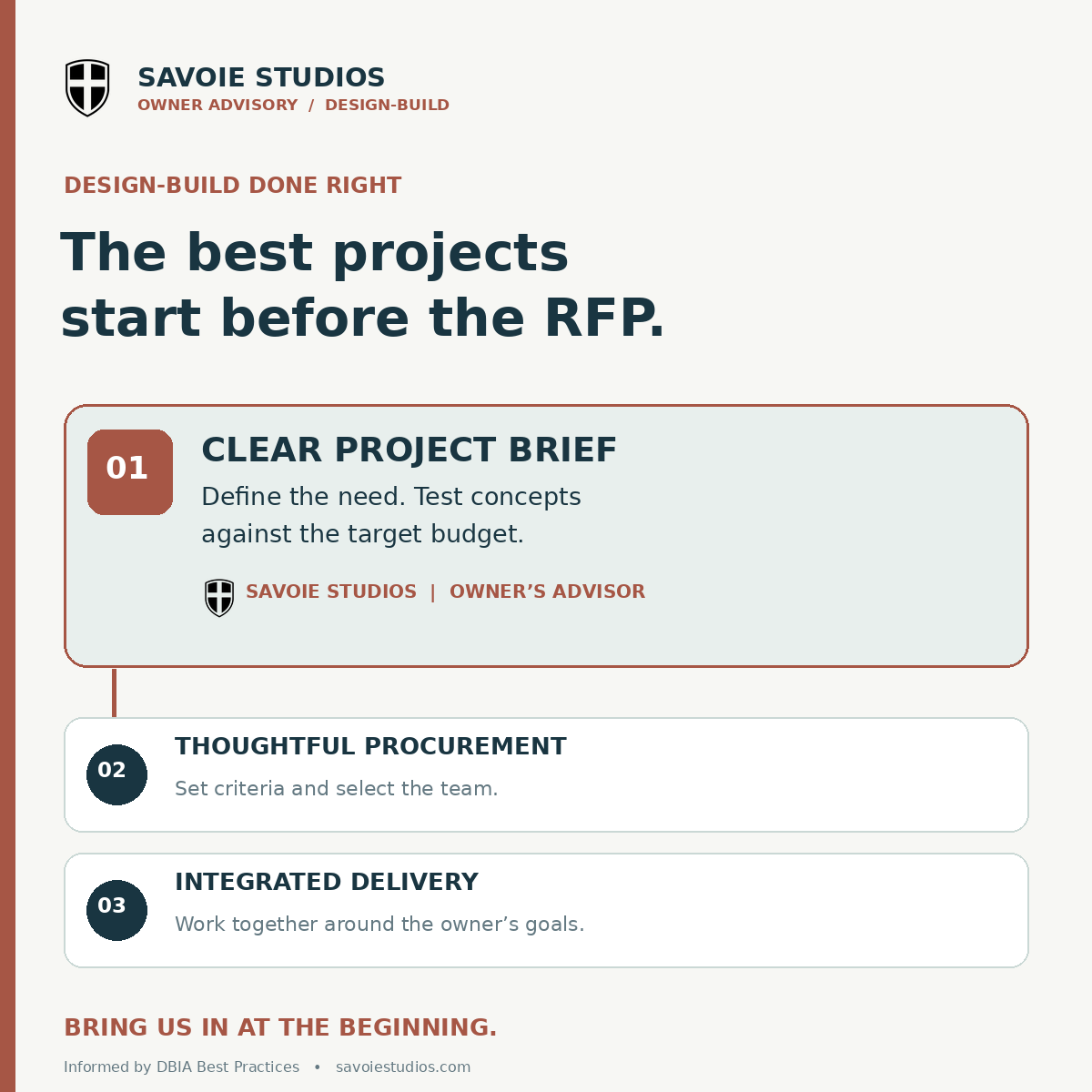
Savoie Studios helps public owners challenge assumptions, align early concepts with a target budget, choose a delivery strategy, and develop criteria for a competitive procurement. There is time to choose the builder and architecture and engineering team after the project has a sound foundation.
Discuss a school or civic projectStatutory references: IC 5-30-1-5 · IC 5-30-6-1 · IC 5-30-6-2 · IC 5-30-6-3. Public agencies should coordinate procurement requirements with their counsel.
A useful criteria package explains what the solution needs to achieve. It establishes meaningful requirements while leaving appropriate room for the design-build team’s expertise and ideas.
Listen to stakeholders. Define purpose, activities, capacity, space relationships, and essential outcomes.
Coordinate scope, performance, quality, durability, operations, budget parameters, phasing, and project constraints.
Prepare technical solicitation content, clarify questions, compare proposed approaches, and document the differences that matter.
Evaluate developing designs against the requirements, identify departures, and explain the implications of proposed changes at agreed milestones.
Steven Savoie’s ability to develop schematic solutions quickly helps us recognize how a project could work before writing its requirements. We can test assumptions, explore alternatives, and turn complex needs into criteria that support informed decisions.
If the project’s vision or delivery method is still open, start with schematic design and project development. Our delivery strategy analysis compares the viable approaches against your priorities, the market, schedule, and available resources. No single procurement method fits every project.
The engagement establishes the documents, reviews, and decision points we support. We work alongside your procurement, legal, facilities, and project teams. The owner retains decision authority and responsibility for its required approvals and procurement process.
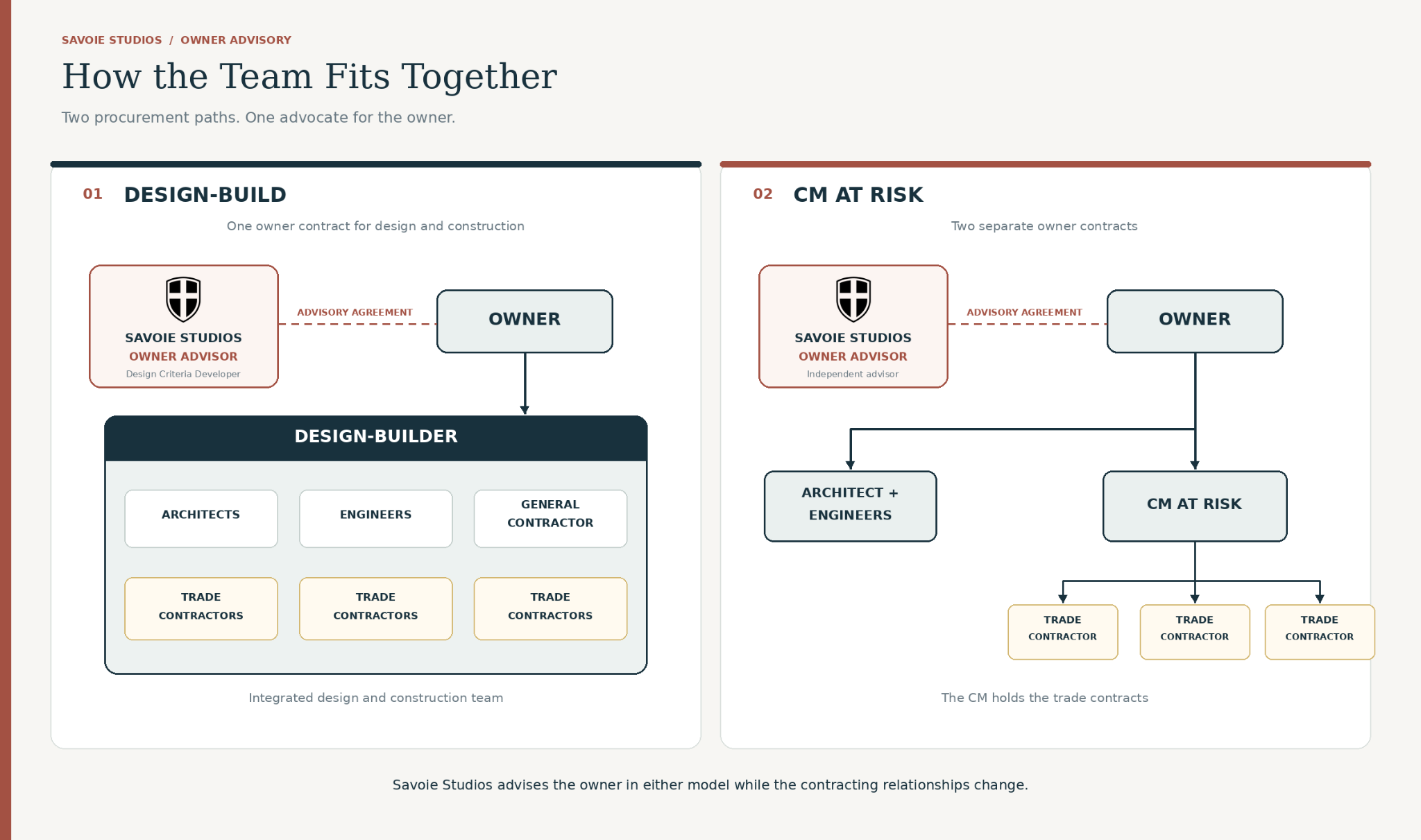
This service supports the owner’s evaluation of its project and proposals. It is scoped separately from an architect-led design-build engagement, in which Savoie Studios leads the team delivering the design and construction.
Bring Savoie Studios in at the very beginning, while the project is still taking shape. We help owners make critical early decisions, challenge assumptions, and test concepts against their goals and target budget. With that foundation in place, there is plenty of time to select the right builder and architecture and engineering team for the chosen delivery path.
No. A criteria package communicates the owner’s requirements and desired performance. Construction drawings and specifications describe how the selected design will be built.
Yes. Our scope can focus on the technical brief, proposal review, and continuing design evaluation while your team manages procurement, approvals, and contract decisions.
No. The content and level of detail should reflect the facility, delivery method, available information, and the owner’s procurement requirements.
Yes. Bring the material you have. We can identify what is established, what needs clarification, and whether a focused review or further development will best support your next decision.
From Owner Resources
A practical walkthrough of the information that helps design-build teams understand the same project. Includes illustrative language, annotations, and a requirement record to adapt with your project team.
Read & download the resourceOwner advisory / Delivery structure
An owner’s perspective / Rushville City Center
“From the beginning, Steve understood that we weren’t simply creating a building. The City Center was an opportunity to strengthen our downtown, create a new gathering place for our community, and demonstrate our confidence in the future of Rushville.”
Reflecting on Steven Savoie’s work as Architect of Record for Rushville City Center.
Read the full testimonialAn owner’s perspective / K–12 education
“His creativity, judgment, and ability to guide important early decisions make him a valuable partner in project development.”
Start a conversation
Bring the idea, the space that is not working, or the decision you need to make. Let’s explore a design direction and the support that fits your project.
Schematic design · Owner advisory & design criteria · Architect-led design-build